Dinger's Aviation Pages
Cunliffe-Owen OA-1 "Flying Wing"
One of the most striking-looking aircraft ever to fly, the Cunliffe-Owen OA-1's chances of success were stifled by the outbreak of WWII.
Article substantially revised in July 2026
Having a tail, the Burnelli designs were not "Flying Wings" in the true aeronautical sense; the correct term would be "lifting fuselage". However, they were referred to as "Flying Wings" in contemporary newspaper and magazine articles (even the British registration papers for G-AFMB give the aircraft type as "Flying Wing"). So, for simplicity, I will refer to them as such.
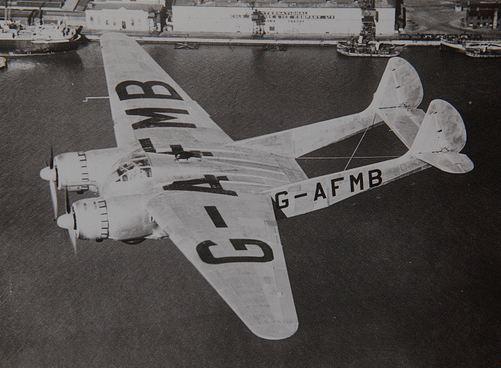
The only Cunliffe-Owen OA-1 built, shown in flight over Southampton harbour. Designed to carry 15 - 20 passengers, it was a compact design. It had retracting main and tail-wheels. The cross-bracing of the tail-booms can be clearly seen. It is sometimes erroneously referred to as a "Clyde Clipper", a name for a previous Burnelli-inspired aircraft project undertaken by a different company, the Scottish Aircraft and Engineering Company.
During the late 1920s and 1930s, American aircraft designer Vincent Burnelli conceived and built a series of aircraft that sought to combine the attributes of a true "flying wing" with the practicalities of stability and size. These culminated in the UB-14, which first flew in 1934. A fuselage of wing profile provided a spacious and strong passenger cabin. A twin-boom tail provided the lateral stability impossible in true flying wing designs until the use of "fly-by-wire" technology. Closely grouped twin engines minimised asymmetric handling problems. The first prototype crashed in spectacular fashion at Newark Airport in New Jersey on the 13th January 1935, but the passenger cabin escaped with little damage, vindicating the designer's claims for the inherent safety of the design. A second prototype was soon flying (the UB-14B) and attracted worldwide interest.
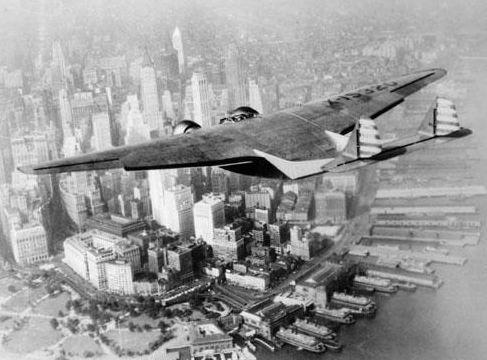
Spectacular shot of the Burnelli UB-14B (registration X-15320) over Manhattan. The UB-14B was slated for a transatlantic record flight, but in the event travelled to Europe as freight on a cargo ship and ended up impounded by customs in the UK before onward shipment to the Netherlands, where it was re-assembled and embarked on a European demonstration tour with the new registration NR15320, arriving back in the UK in December of 1937, after the Scottish Aircraft and Engineering Company that had been planning to build it under licence had been liquidated. It was shipped back to the USA, reportedly in preparation for a round-the-world record attempt, but its licence was revoked in May 1939. It was then refurbished with subtle alterations to the rudders and had new engines fitted. It was sold to the Central American TACA airline in July 1943 and operated with the Nicaraguan registration AN-ABH. It was then used for freight-carrying flights over the Caribbean. Last reported as being unairworthy in December 1945, its ultimate fate appears to be unknown.
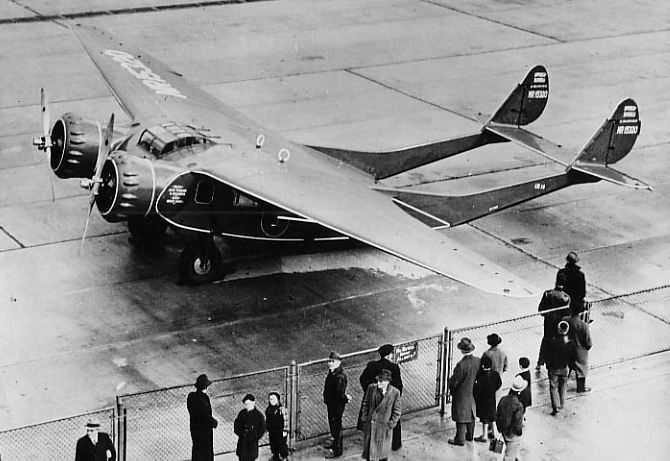
Photo of the Burnelli UB-14B. Compare it with the photo of the Cunliffe-Owen OA-1 at the top of the page; you'll see substantial changes. The OA-1 looks a lot larger. The cockpit is completely different, and the tail booms of the UB-14B are much more slender than those of the OA-1.
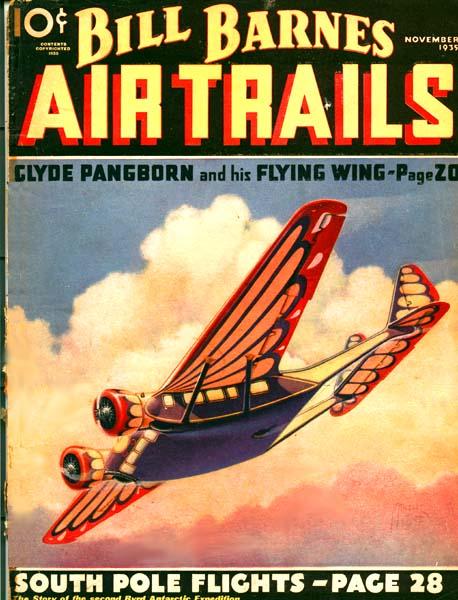
This cover of an American aviation magazine shows an approximation of the Burnelli UB-14 in a particularly exotic colour scheme. The article in the magazine covers Clyde Pangborn's involvement with the "Flying Wing". Clyde Pangborn was a pioneer U.S. aviator who gave considerable backing to Burnelli and who had planned to use the UB-14 on record-breaking flights. It seems his first name being the same as the "Clyde Clipper" was a happy coincidence. Pangborn went on to work for Cunliffe-Owen in the UK and was the test pilot for the first flight of the OA-1. Later he joined the RAF, where he was instrumental in setting up the Atlantic Ferry organisation. A true hero; you can read about him in this Wikipedia article <click here>.
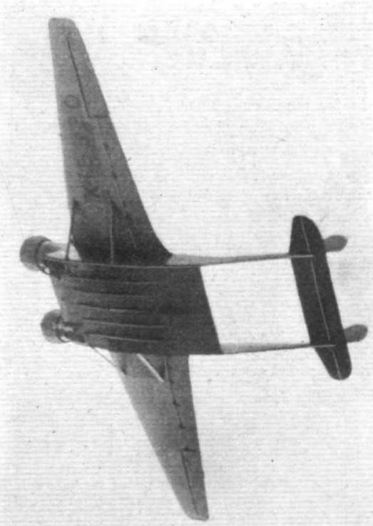
The Burnelli UB-14B in flight.
The Burnelli UB-14B in flight.
Burnelli never succeeded in getting his brainchild into production in the USA (there is a conspiracy theory about this failure you can read about by clicking on <this link>). However, he had little problem attracting interest in other countries. Unfortunately, in each case, he ended up negotiating licence production with companies that wanted to break into the civil aviation marketplace rather than ones already established in it. A deal with the Canadian Can-Car company led to a single aircraft that only flew in 1945 (the CBY-3, to read about it click <this link>), while production in the Netherlands, by the Aviolanda company, fell through altogether. In the UK, the "Scottish Aircraft & Engineering Company" was formed in 1936 to build a version of the UB-14B to be called the "British Burnelli BR-Mk II". The design was initially presented in press releases with air-cooled radial engines, but in 1937, the British Rolls-Royce inline, liquid-cooled Kestrel engines were mooted as powerplants instead. At the time, there was huge unemployment in Scotland in the aftermath of the economic depression, and there were various schemes to subsidise the setting up of factories in Scotland, especially in Glasgow and other towns along the River Clyde (Blackburn Aircraft was one company that took advantage of this, setting up a flying-boat factory at Dumbarton). It seems the Scottish Aircraft & Engineering Company hoped to take advantage of these schemes, although the only addresses listed in its many press advertisements were in London. These press adverts were prodigious, and a lot of interest was whipped up for their 16-seat version of the Burnelli, and the name was changed to "The Clyde Clipper", a reference to where they hoped to produce the aircraft (there was also to be a cargo-carrying version to be called the "Clyde Carrier"). With war clouds looming, in March 1937, they also advertised a bomber version¹, apparently to be called the "Clyde Corsair" and a fighter version, armed with the short-barrelled American Armaments 37 mm cannon in turrets, to be called the "Clyde Comet". All of this came to nought; the company collapsed with only a wooden mock-up of the Clyde Clipper to show for its efforts. The receivers were called in on the 26th of July 1937.
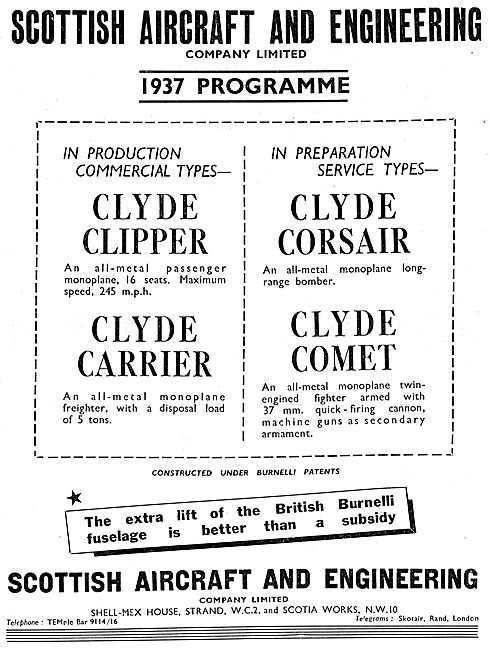
A press advertisement from 1937 showcasing the range of Burnelli-inspired projects the Scottish Aircraft and Engineering Company was working on. The "subsidy" mentioned in the text refers to the financial assistance that governments provided to most airlines during that period to make them viable. This was often in the form of payments for carrying air mail.
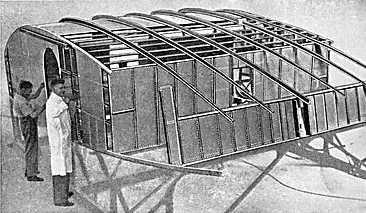
An image from another advertisement for the Scottish Aircraft and Engineering Company, purporting to show their "Clyde Clipper" under construction. In fact, it was just a wooden mock-up.
An image from another advertisement for the Scottish Aircraft and Engineering Company, purporting to show their "Clyde Clipper" under construction. In fact, it was just a wooden mock-up.
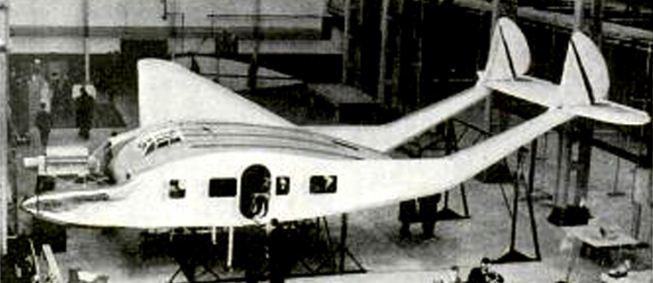
An image of the Scottish Aircraft & Engineering Companies' "Clyde Clipper" wooden mock-up at their "Scotia Works" in Wembley, West London. Apparently, the inline Kestrel engine was simply a flat wooden panel painted to give a 3-D representation of the engine. The use of the Kestrel would have given a better view for the pilots than that afforded by the Perseus radial-engined Cunliffe-Owen OA-1. There was a recess in the underside of the wing to allow full access to the door, which would otherwise have had to be uncomfortably small. You'll see that the Scottish Aircraft "Clipper", with its slender tail booms, looks much more like the original Burnelli than the later Cunliffe-Owen OA-1. The Scottish Aircraft and Engineering company should not be confused with "Scottish Aviation Limited", which was based at Prestwick in Scotland. That was an entirely different company that specialised in training and only moved into aircraft maintenance and manufacturing during the war.
A YouTube video of a contemporary newsreel shows the mock-up of the "Clyde Clipper".
A YouTube video of a contemporary newsreel shows the mock-up of the "Clyde Clipper".
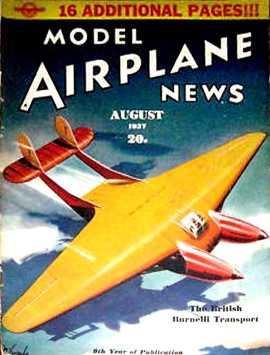
Magazine Cover illustration of Scottish Aircraft and Engineering Company "Clyde Clipper" with inline Kestrel engines.
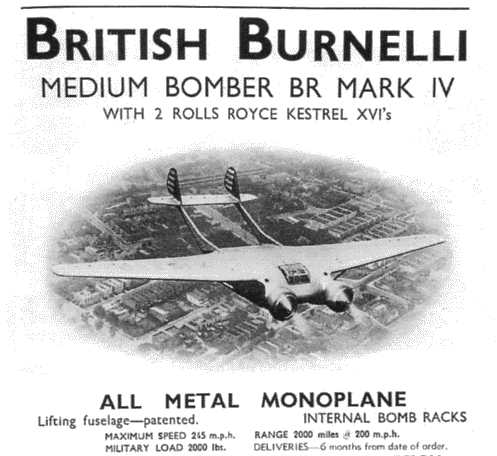
The January 1937 advert for the "British Burnelli Medium Bomber BR Mk IV" features a photo of the Burnelli UB-14B with some extravagant claims for performance and a promise of delivery within 6 months. The project was later renamed the "Clyde Corsair".
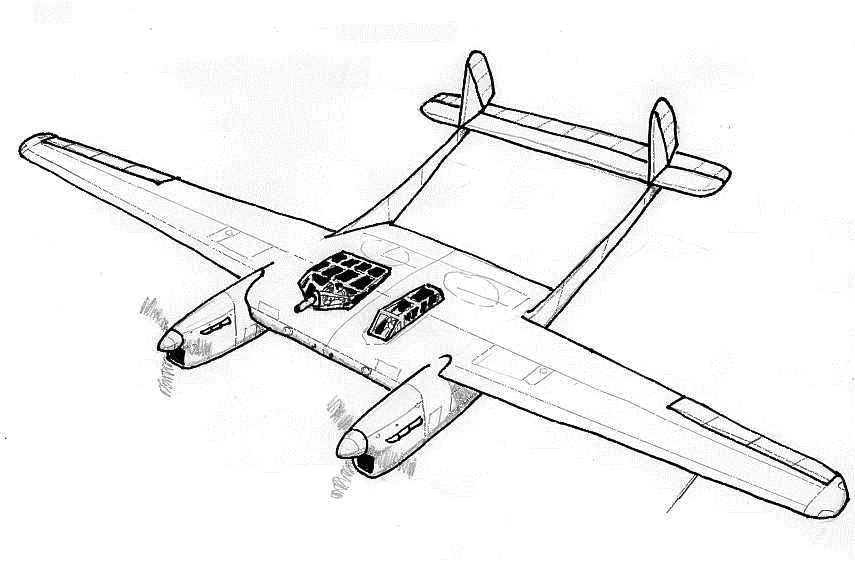
An approximation of the Scottish Aircraft and Engineering Company's " Clyde Comet" fighter. It was designed to have a single 37mm cannon firing forward and another two in ventral positions firing to the rear with "machine guns as secondary armament". The cannons, made by the American Armaments Company of New York, were a truly dreadful design. The gunner sat side-on to the cannon, looking sideways to aim, while manipulating two hand cranks, one to traverse the cannon and another to elevate it. The cannon itself was fired by a foot pedal. Clips of 5 rounds had to be manually loaded, but if there was a misfire, the weapon was rendered useless because it required two people to recock it with a special tool, something that could only be done on the ground. The weapon was a development of the French Puteaux trench gun of WW1, adapted for automatic operation. The recoil mechanism decreased the already low muzzle velocity to give it poor range and penetration. It was widely featured in American aviation journals in the 1930s with exaggerated claims made for its performance (rates of fire of 120 rounds a minute were claimed, ignoring the fact that clips had to be reloaded after every 5 rounds). In use on the Clyde Comet fighter, you have to wonder how it would avoid shooting off the propellers! The cannon was also used on another aborted project, the American Tucker armoured car.
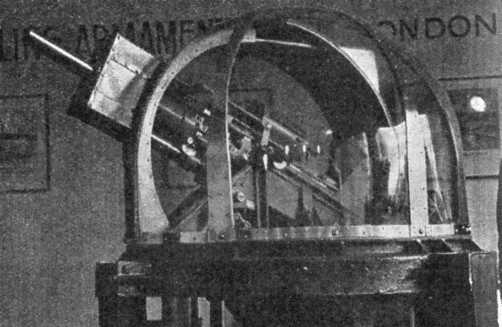
An example of the awful American Armaments cannon, mounted in a turret at the 1939 Brussels Aeronautical Exhibition.
The January 1937 advert for the "British Burnelli Medium Bomber BR Mk IV" features a photo of the Burnelli UB-14B with some extravagant claims for performance and a promise of delivery within 6 months. The project was later renamed the "Clyde Corsair".
An approximation of the Scottish Aircraft and Engineering Company's " Clyde Comet" fighter. It was designed to have a single 37mm cannon firing forward and another two in ventral positions firing to the rear with "machine guns as secondary armament". The cannons, made by the American Armaments Company of New York, were a truly dreadful design. The gunner sat side-on to the cannon, looking sideways to aim, while manipulating two hand cranks, one to traverse the cannon and another to elevate it. The cannon itself was fired by a foot pedal. Clips of 5 rounds had to be manually loaded, but if there was a misfire, the weapon was rendered useless because it required two people to recock it with a special tool, something that could only be done on the ground. The weapon was a development of the French Puteaux trench gun of WW1, adapted for automatic operation. The recoil mechanism decreased the already low muzzle velocity to give it poor range and penetration. It was widely featured in American aviation journals in the 1930s with exaggerated claims made for its performance (rates of fire of 120 rounds a minute were claimed, ignoring the fact that clips had to be reloaded after every 5 rounds). In use on the Clyde Comet fighter, you have to wonder how it would avoid shooting off the propellers! The cannon was also used on another aborted project, the American Tucker armoured car.
An example of the awful American Armaments cannon, mounted in a turret at the 1939 Brussels Aeronautical Exhibition.
To pick up the pieces, in stepped Sir Hugo Cunliffe-Owen, a flamboyant industrialist and racehorse owner who had been planning to use a "Clyde Clipper" for his own attempt at winning a New York to Paris air race². He purchased the rights to produce the Burnelli design, establishing "B.A.O. Ltd" * to build the aircraft in August 1937. Construction of the prototype was to begin soon afterwards in an existing hangar (hangar 2A) at Eastleigh near Southampton. The company name was changed to "Cunliffe-Owen Aircraft" on the 24th May 1938. At the same time, work started on the construction of a brand new state-of-the-art aircraft factory at Eastleigh to build the new design in quantity. The new factory was formally opened by the Mayor of Southampton on the 23rd of January 1939. The choice of Southampton may seem strange given the subsidies available in Scotland, but in the late 1930s, "Red Clydeside" had a bad reputation for industrial relations. Meanwhile, the Southampton and Solent area was already the home of many aviation companies like Supermarine, Saunders-Roe and Airspeed and promised to have a ready-made skilled workforce available.³ Some sources claim the building of the new Cunliffe-Owen factory was subsidised under the "shadow factory" scheme, but it is not at all clear if that was the case; it is not on any of the lists of such projects. It seems unlikely that Cunliffe-Owen got any public money for the initial building of the factory.
Sir Hugo had the Burnelli redesigned to use two of the new Perseus sleeve-valve radial engines made by the Bristol Engine Company. The redesign was supervised by William Garrow-Fisher, who had joined Cunliffe-Owen from the defunct Scottish Aircraft and Engineering Company along with some other staff. The Cunliffe-Owen "Flying-Wing" design was substantially different in structure and larger than the original Burnelli UB-14B and Scottish Aircraft "Clyde Clipper" mock-up. The future of the new aircraft initially looked bright. It promised to have a similar performance and load-carrying capacity to the Douglas DC-2. It took up substantially less hangar space than the DC-2 and offered passengers a comfortable "wide-body" cabin with large picture window views of the ground, unobstructed by the wings (the novelty of air travel and the better views of the ground available at the lower altitudes airlines then flew at meant the view for passengers was considered a very important factor in selling tickets).
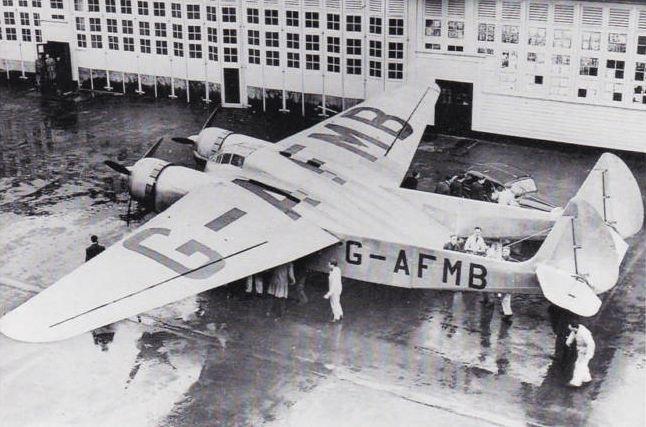
On the wet tarmac at Eastleigh, outside the stunning brand-new Cunliffe-Owen factory (soon to be the target of German Luftwaffe bombing), the Cunliffe-Owen OA-1 "Flying Wing" prototype G-AFMB is inspected by factory staff and admirers. You can appreciate how the twin Perseus radials cut off large parts of the pilot's forward view. Note also the much thicker wing booms than the earlier UB-14B and "Clyde Clipper" mock-up. The OA-1 was designed to float if it had to ditch in the water. There were doors in the roof of the cabin to allow passengers to clamber out onto the top of the wing in such an eventuality.
Another benefit of the Burnelli layout was that, with suitable ballast in the rear of the passenger compartment, you could detach the twin tail booms while still leaving the fuselage standing on the tailwheel. They built provision for this into the design. (you can make out the join-line for the tail running between the "A" and "F" serials on the tail boom in the photos above and below).
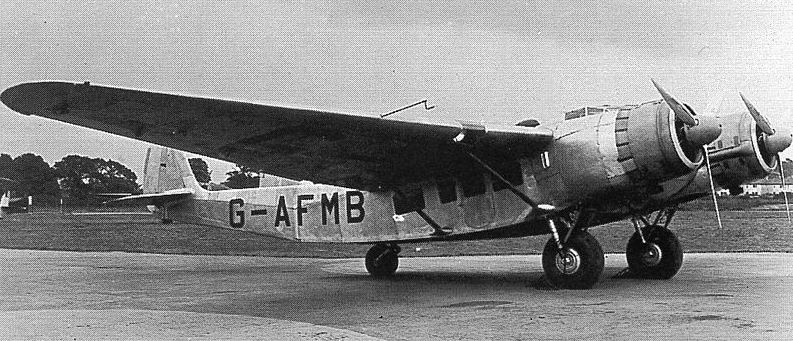
View of the OA-1 showing the poor sideways view from the cockpit for taxiing. Note the bracing struts under the wings and the height of the passenger door above the ground, requiring steps for boarding.
Some sources assume that the OA-1 was assembled from parts shipped over from the USA. There is no evidence for this. The engines were made in Britain, as was the undercarriage. Lots of British companies advertised in the aeronautical press that their products were being used in the OA-1. At the time, currency exchange rates and labour costs meant that items manufactured in the USA could be double or triple the cost of the same items made in the UK, and that is without the extra costs of shipping. So it would have been uneconomic to ship in parts from America. One part of the OA-1 did come from outside the UK: the propellers were made by Vereinigte Deutsche Metallwerke (VDM) in Germany. They could be fully feathered to stop them from "windmilling" and causing drag if an engine failed. Their pitch was manual in operation and needed constant adjustment during takeoff and landings, adding to the workload of the pilot. At the time, no British manufacturer was producing a propeller that could be fully feathered. It may be that the Bristol Perseus Mk XIV-C engine was specially made to take the VDM propellers, since no other aircraft type used that particular mark of the engine. In April 1940, Bristol started producing the Mark XVI version of the Perseus engine, which was able to take a de Havilland hydromatic propeller, which was capable of being fully feathered and also had the advantage that it was an automatic "constant-speed" type, greatly reducing the pilot's workload. Perseus Mk XVI engines were retrofitted to the de Havilland DH95 Flamingo airliners.
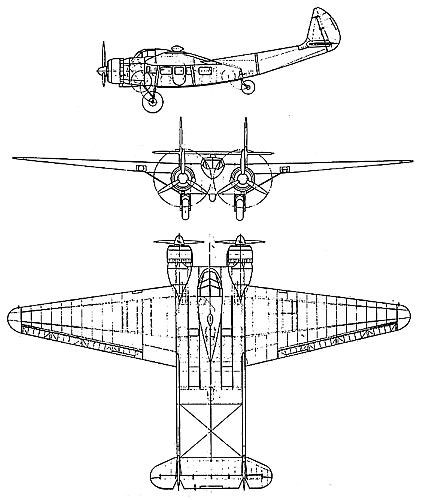
The Cunliffe-Owen OA-1
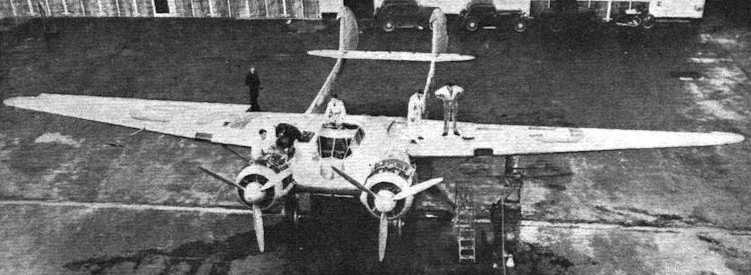
Another view of the OA-1 outside the Cunliffe-Owen factory.
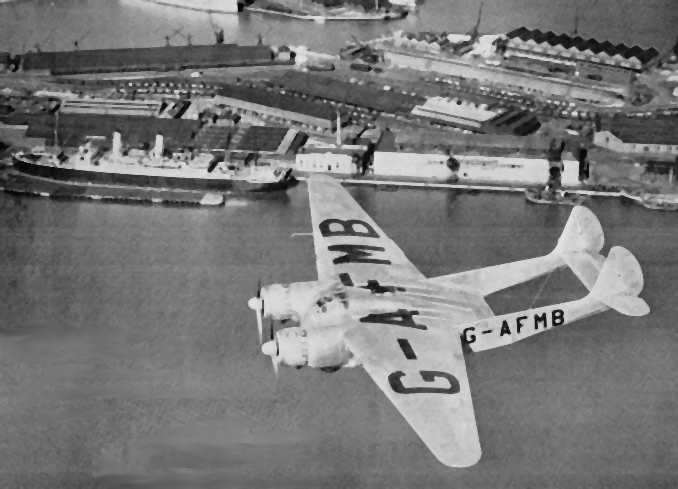
The OA-1 in flight over Southampton Docks.
Another view of the OA-1 outside the Cunliffe-Owen factory.
The OA-1 in flight over Southampton Docks.
Unfortunately, Sir Hugo's timing for starting construction of a new aircraft type could not have been worse. As war clouds gathered, all the established aircraft companies found themselves with full order books and aircraft designers, production staff and skilled workmen became scarce. This was to have dire consequences for the new OA-1 Flying Wing. The design and building of the prototype was completed within the remarkably short time of 18 months, but this was still longer than anticipated, and it was subsequently slated for a host of detail design flaws and bad workmanship in its construction. By the time the prototype first flew, on 12th January 1939, piloted by Clyde Pangborn, the new Douglas DC3 had replaced the DC2 on the production line and set new standards of performance and economy. The rival British deHavilland DH91 Albatross and Armstrong Whitworth Ensign airliners were already in service, and the prototype de Havilland DH95 Flamingo, aimed at the same market as the OA-1, had flown the month before. New designs in the pipeline with pressurised passenger compartments like the Douglas DC-4, Curtiss CW-20 and Fairey FC1 looked set to make the OA-1 obsolescent even before it entered service. It is clear now that the OA-1 was three or four years too late to make any impact on the civil aviation marketplace.
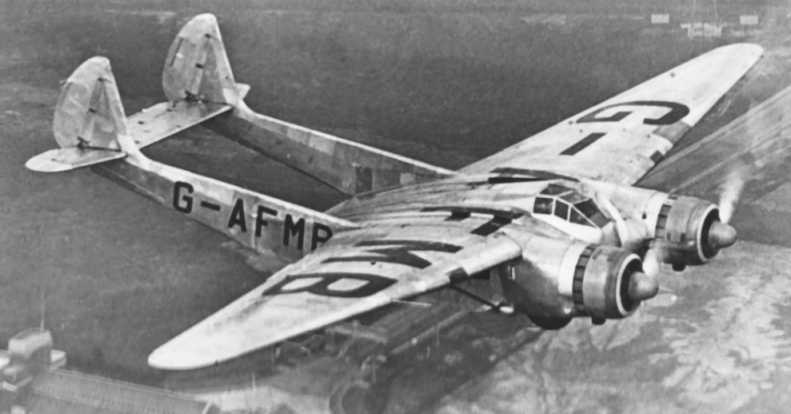
Cunliffe-Owen OA-1 in flight.
In June 1939, the Cunliffe-Owen OA-1 went to the Aircraft and Armament Experimental Establishment (A&AEE) at Martlesham Heath for evaluation and certification. At the outbreak of war in September, A&AEE was moved to Boscombe Down, and the OA-1's testing continued there, with two reports on its performance being delivered in November 1939. The OA-1's flying qualities, although not perfect, with poor harmonisation of controls with heavy rudder and elevator forces required, were generally considered adequate for a prototype aircraft. Because of its VDM propellers, which could be fully feathered, height could be maintained on one engine with a full load. However, as already noted, it was reported that having to progressively adjust the propeller pitch during takeoff and landing added to the pilot's workload. The OA-1's takeoff and landing distances were considered excessive for the time, causing A&AEE to rule that the aircraft should not be operated at all-up weights of over 18,010 lbs (8169 kg), a reduction of nearly 1,000 lbs (454 kg) in the payload that its designers had hoped for.
As already mentioned, many aspects of the detail design were condemned, and the construction and workmanship were found to be woefully poor. Operating the aircraft's brakes required the pilot to take his hand off the throttle levers, not the best practice when taxiing. The electrical fuses and oil temperature monitoring system were both found to have been installed incorrectly. During flight testing, both engine carburettors became detached from their mountings due to vibration of the engines. Perhaps the most jaw-dropping aspect of the OA-1's design was the crude method of locking the retractable undercarriage in the "up" position; both the pilot and copilot's postions had a cord that had to be pulled to pull a locking strut into position on each of the main undercarriage units, it was then held there by putting a ring on the end of the cord over a hook on the side of the cockpit. Thus, although the OA-1 was perfectly capable of being flown by a single pilot, there had to be someone in the copilot's seat to hook/unhook the cord when taking off and landing, it being out of reach of the pilot! The view from the cockpit was poor, except for directly ahead, with very limited side vision for taxiing. There was no way for the pilots to check the action of the control surfaces unless the escape hatch in the roof was opened and one of the pilots stood on his seat to get a view. Even then, there was no view of the flaps under the wings and fuselage, and since there were no indicators for these in the cockpit, one of the pilots would need to get out of the aircraft to check their operation or trust to the ground crew signalling their position. The extensive glazing above the pilot's heads made the cockpit area into a hot "greenhouse" in clear weather at low altitude. Although the pilot's seats were comfortable, getting into or out of them was complicated by them having to be slid to the side to use the door at the rear of the cockpit. This opened into an alcove behind the toilet cubicle, which was located in the middle of the front of the passenger cabin. The passenger doors on each side of the cabin had an elaborate operating method, and while being described as "flimsy", were difficult to open. It was felt that exiting through them in an emergency could be a problem, although it was noted that another method of exit was through the passenger windows, which could be pushed out with ease, although not by design! If bailing out with parachutes, the pilots could exit through an escape hatch in the transparency over their heads, but there was then the danger of hitting the bracing wires between the tail booms.
The OA-1 was refused a Certificate of Airworthiness (CofA) and returned to the manufacturer's Eastleigh factory.
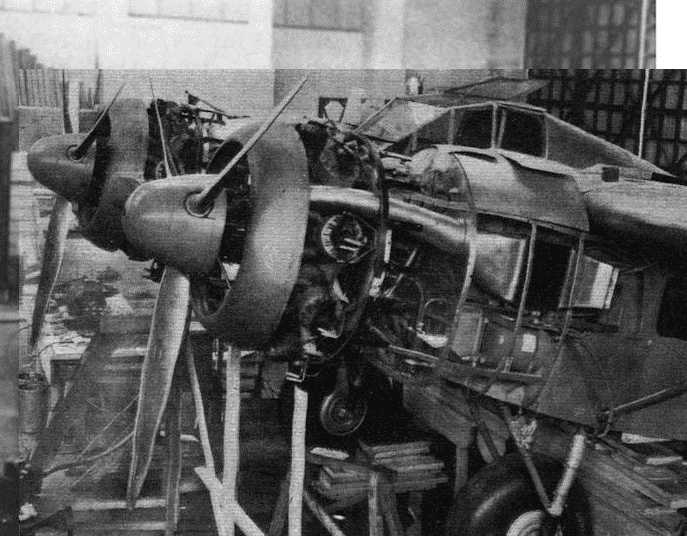
The OA-1 was the only type of aircraft to use the XIV-C version of the Bristol Perseus engine. This was a civil version of the engine, producing only 710 horsepower for cruising, although it could deliver 890 hp for short bursts at takeoff (the closely related XII-C1, XVI and XVIC were used on the DH95 Flamingo). It was fitted with German VDM propellers. Although the sleeve-valve Perseus was a quiet engine, the proximity of the engine exhaust to the passenger cabin must have raised noise levels considerably. The mountings of the engines were criticised in A&AEE's report, vibration of the engines being linked to both engine carburettors becoming dislodged in flight!
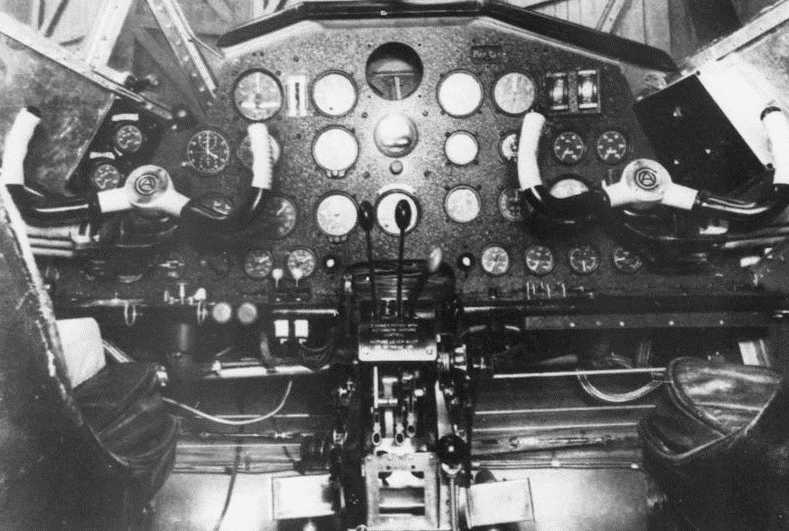
The cockpit of the OA-1 came in for a lot of criticism in A&AEE's report. Although the layout of most instruments was good, those on the bottom row were hard to read. Some of the controls were difficult to get at, the position and operation of the fuel cocks being particularly bad. The control columns did not have stops to prevent the ailerons from snagging on their surroundings. Vision from the cockpit was awful and its "greenhouse" structure became unbearably hot in clear weather at low altitude. The seats were comfortable, but entrance to the cockpit was awkward. You can see in the photo above that the seats had to be slid to the side to give room to enter the cabin.
The cockpit of the OA-1 came in for a lot of criticism in A&AEE's report. Although the layout of most instruments was good, those on the bottom row were hard to read. Some of the controls were difficult to get at, the position and operation of the fuel cocks being particularly bad. The control columns did not have stops to prevent the ailerons from snagging on their surroundings. Vision from the cockpit was awful and its "greenhouse" structure became unbearably hot in clear weather at low altitude. The seats were comfortable, but entrance to the cockpit was awkward. You can see in the photo above that the seats had to be slid to the side to give room to enter the cabin.
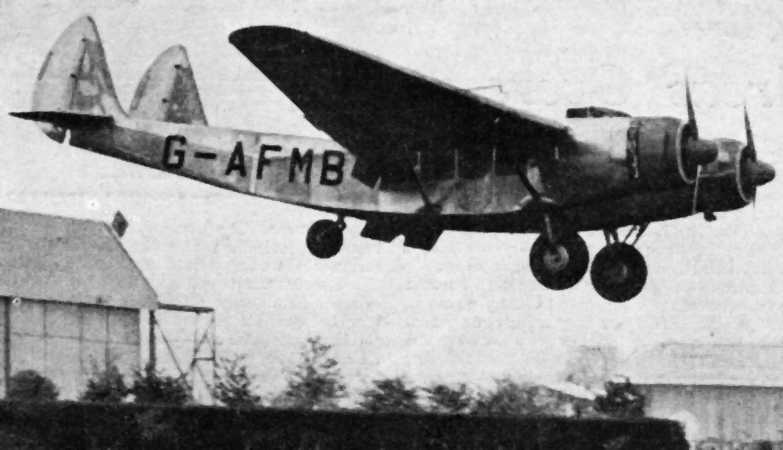
The OA-1 shown coming in to land. Of particular note is the fuselage flap. The fuselage and wing flaps could be operated separately from each other, although they had only two positions, "up" or "down", and couldn't be used on takeoff. The OA-1 is sometimes credited with a good short-field performance, perhaps confusing it with the UB-14B, which was often demonstrated with sharp climb-aways and short landings by Clyde Pangborn. Testing at A&AEE revealed the OA-1 to have takeoff and landing runs longer than other contemporary British airliners, such as the DH95 Flamingo and AW Ensign. The takeoff run distance was particularly disappointing, leading A&AEE to restrict the loaded weight of the OA-1 to 18,010 lbs (8169 kg), which was a reduction in payload of nearly 1,000 lbs (454 kg) below what had been hoped for.
Even while the OA-1 was being tested at A&AEE, it must have been evident to Cunliffe-Owen that the design had shortcomings, because late in 1939, they advertised a proposed OA "Mark II". This had tail booms that were thicker (thick enough to accommodate a toilet in one boom and an extra cargo hold in the other) and did not require cross-bracing wires between them. The booms were not angled up, giving the Mk II a more streamlined look. Advertisements for Cunliffe-Owen featuring the Mark II would continue to appear in the British aeronautical press until at least May of 1940.
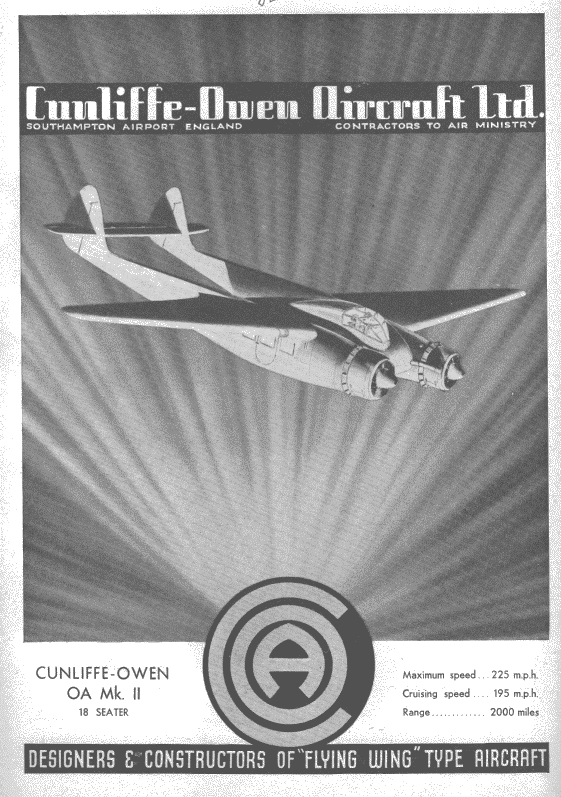
Advertisement for the proposed "Mark II" version of the Flying Wing. Notice the tail booms are straight, making the aircraft look more streamlined.
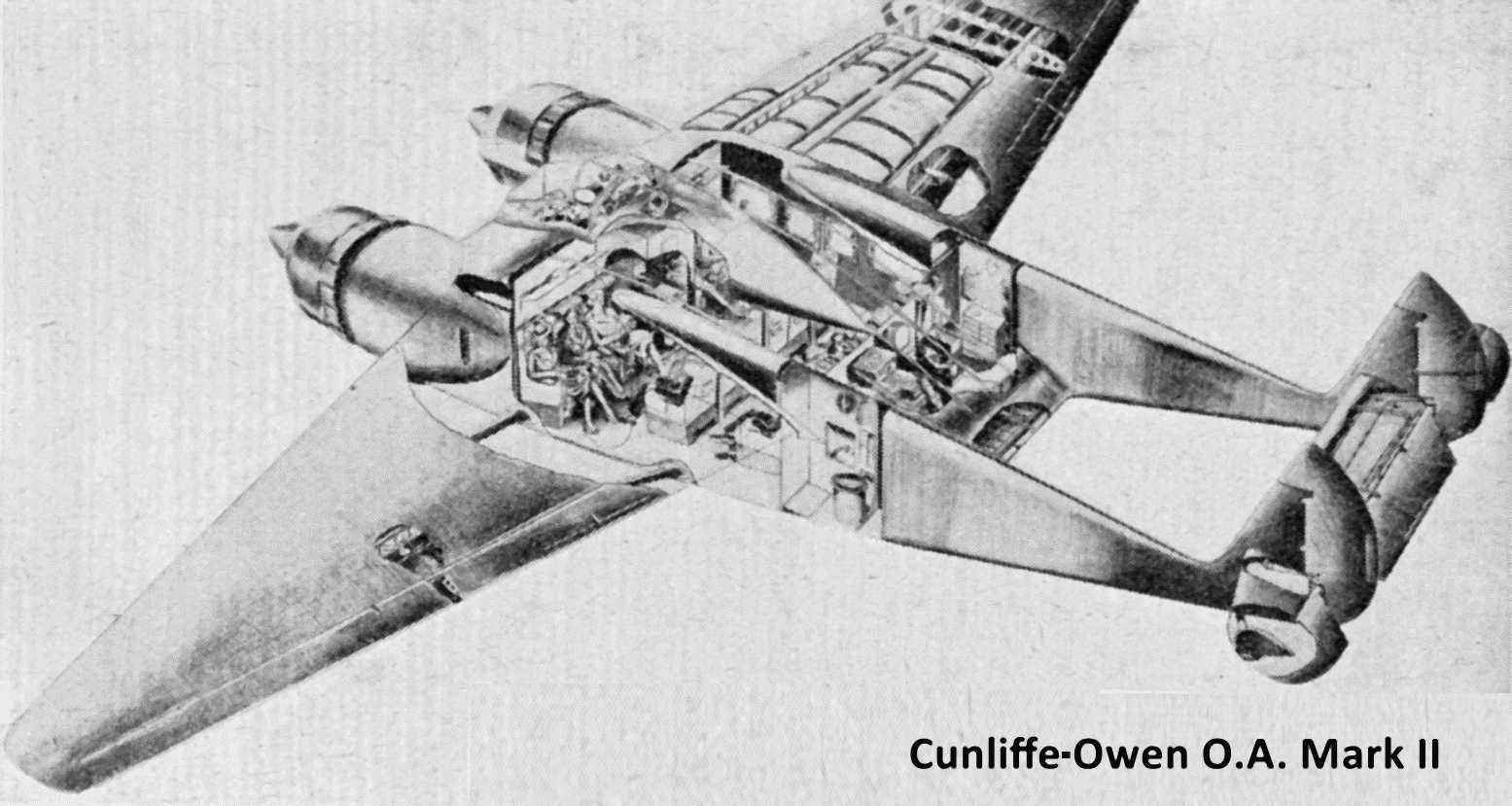
Cutaway diagram of the proposed Mark II Flying Wing. You can just make out that the added thickness of the tail booms allows a toilet to be accommodated in one and extra baggage ("larder") to be carried in the other.
If Sir Hugo's timing for constructing the prototype OA-1 was disastrous, his timing for building a brand-new aircraft factory could not have been better. In 1939, the factory was employed in the assembly of Lockheed 14 airliners for British Airways. Cunliffe-Owen also got a contract to do repair work on Hawker Henley target tugs damaged in service. When war was declared, his factory space became much in demand, and production from other manufacturers (notably Supermarine, who shared the Eastleigh airfield with Cunliffe-Owen) and the need to reassemble aircraft shipped over from the USA into the port of Southampton soon filled it to bursting. There would have been no space to produce the OA-1 even if it had been a success. The Cunliffe-Owen factory was severely damaged by the German Luftwaffe during the Battle of Britain, but it was subsequently repaired and continued in use throughout the war, with further production facilities being added at a nearby site at Marwell. Cunliffe-Owen were responsible for the construction of 250 examples of the Seafire Mk III. The Cunliffe-Owen Seafires were particularly valued by pilots because they were completely flush-riveted, giving them better performance than those built by other companies.
What to do with the OA-1 prototype? The company did find time to fix many of its shortcomings. At some stage it was fitted with radio equipment with an associated direction-finding loop housed in a teardrop behind the cockpit. It is hard to see this equipment being operated from the cockpit, so presumably a radio operator was accommodated in some portion of the passenger cabin. It was inspected by A&AEE again in March of 1940 and was granted a Certificate of Airworthiness in November 1940 (certificate number 6881). Since one of the major criticisms of its construction was the lack of any sort of anti-corrosion finish, what better place to use it than in a desert, where corrosion would be no problem! The aircraft was impressed into the RAF on 31st May 1941 (although no RAF serial was allocated). In June 1941, it was piloted to North Africa by the daredevil flyer Jim Mollison with a crew of three⁴, to join the Free French Forces. It was flown out by a circuitous route, via Gibraltar, Malta, Cairo, Wadi Halfa, Khartoum, El Fasher, El Geneina, Fort Archambault and Fort Lamy (N'Djamena) to Bangui. One source said that Mollison claimed to have flown the first leg to Malta over the length of occupied France⁵ (although it's hard to see how this could be done, except at night, and the hours of darkness would have been very short in June). There were some doubts that it could have landed and taken off at Gibraltar since the runway there had not been lengthened for large aircraft at that time. However, the OA-1 must have done it, since an eyewitness account of it taking off from Gibraltar on the 6th of June 1941 exists⁶. A photo of the OA-1, reportedly in either Malta or Egypt, shows it to have camouflaged upper surfaces (that was normal for British civil aircraft at the time). It also shows it still to be wearing its civilian registration.
What to do with the OA-1 prototype? The company did find time to fix many of its shortcomings. At some stage it was fitted with radio equipment with an associated direction-finding loop housed in a teardrop behind the cockpit. It is hard to see this equipment being operated from the cockpit, so presumably a radio operator was accommodated in some portion of the passenger cabin. It was inspected by A&AEE again in March of 1940 and was granted a Certificate of Airworthiness in November 1940 (certificate number 6881). Since one of the major criticisms of its construction was the lack of any sort of anti-corrosion finish, what better place to use it than in a desert, where corrosion would be no problem! The aircraft was impressed into the RAF on 31st May 1941 (although no RAF serial was allocated). In June 1941, it was piloted to North Africa by the daredevil flyer Jim Mollison with a crew of three⁴, to join the Free French Forces. It was flown out by a circuitous route, via Gibraltar, Malta, Cairo, Wadi Halfa, Khartoum, El Fasher, El Geneina, Fort Archambault and Fort Lamy (N'Djamena) to Bangui. One source said that Mollison claimed to have flown the first leg to Malta over the length of occupied France⁵ (although it's hard to see how this could be done, except at night, and the hours of darkness would have been very short in June). There were some doubts that it could have landed and taken off at Gibraltar since the runway there had not been lengthened for large aircraft at that time. However, the OA-1 must have done it, since an eyewitness account of it taking off from Gibraltar on the 6th of June 1941 exists⁶. A photo of the OA-1, reportedly in either Malta or Egypt, shows it to have camouflaged upper surfaces (that was normal for British civil aircraft at the time). It also shows it still to be wearing its civilian registration.
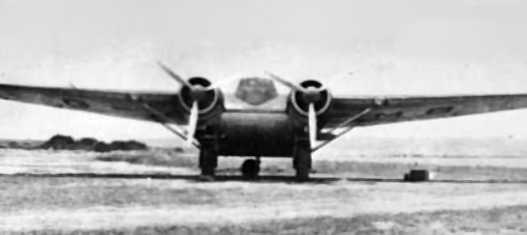
This photo of the OA-1 has been variously identified as being taken in either Malta or Egypt on its way to French Africa. A better photo, obviously taken at the same location, can be found in the Summer 2008 edition of Air-Britain Archive magazine, where it is identified as being in Malta. In the image above, you can clearly see the aircraft still has its British civil registration, G-AFMB, although official records show the registration was cancelled on the 6th of June 1941, the day it is recorded as leaving Gibraltar.
Did the OA-1 receive any major changes before being sent out to Africa? Provision for the flaps to be extended to a mid-position so they could be used to shorten the takeoff run would have been one highly desirable modification. Also, the exchange of the engines for the Mark XVI version of the Perseus engine, with fully-feathering, constant-speed de Havilland propellers, would have been another worthwhile change. It would have made the pilot's job on takeoff and landing easier and also given commonality of spares with the de Havilland DH95 Flamingo airliners that were due to follow the OA-1 out to Africa four months later. However, no details of any such changes are recorded, so it must be presumed that the OA-1 retained its original configuration for the flight out to Africa. Photos, taken later in its use by the French, show that the air intakes under the engines were fitted with large air filters, similar to the ones used on Wellesley bombers, to protect them from the sand and dust of the desert. Some photos taken of the OA-1 in Africa show it having the same style of propeller spinners that it had been built with in the UK, but a couple seem to show it fitted with smaller spinners that did not extend all the way around the roots of the propellers, and the propellers seem to be of a slightly different shape. It is possible that late in its service, the OA-1 had its engines and propellers changed for those taken from a BOAC DH95 Flamingo airliner (the Flamingos were a disappointment in service in Africa and were grounded from September 1943). It's perhaps fitting that the OA-1 ended up being used by the Free French, because the French had been pioneers of the "lifting fuselage" concept with their Dyle et Bacalan DB-70 airliner, which evolved into the prototype SAB AB-20 and AB-21 bombers.
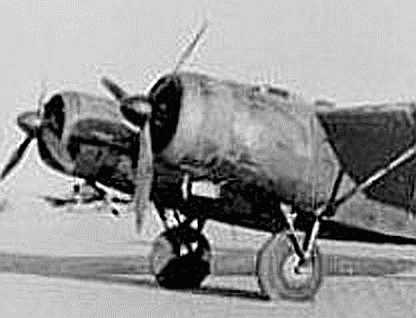
This blurred image of the OA-1 in Free French service seems to show smaller spinners that do not enclose the roots of the propellers, and the propellers themselves look slightly different to the German VDM propellers originally fitted to the OA-1. Were the OA-1's engines and propellers replaced by ones stripped from a DH95 Flamingo?
Rumours that the OA-1 was used by General Charles de Gaulle during his visits to French Africa are not backed up by any solid evidence (although de Gaulle did present JIm Mollison with a jewelled cigarette case for ferrying the OA-1 out). The OA-1 was used for cargo carrying across French Africa, operated by Lignes Aériennes Militaires (LAM), a nominally civilian organisation, although dedicated to supporting the Free French military. It was in service until at least June 1944, when it was apparently damaged at Rayaq in Lebanon, after which it was flown to Egypt for repairs. On VJ night 1945, it was languishing in the salvage compound at No 2 Transport Aircraft Repair Unit (TARU) at El Kabrit in Egypt, stripped of wings, engines and most interior fittings. It was burnt on a bonfire to celebrate the end of hostilities.
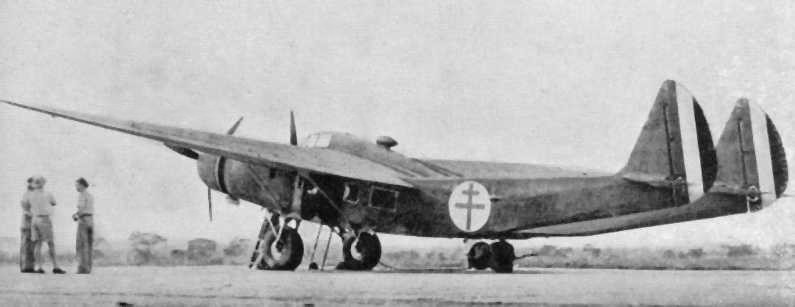
The OA-1 in Free French service. Note it has been fitted with a direction finding loop, housed in the teardrop behind the cockpit. This implies the aircraft has been fitted with radio equipment and a position to operate it from. In French service, it was reported to have been painted blue. It carried a large Cross of Lorraine symbol on each of the tail booms.
And so ended the Cunliffe-Owen OA-1 "Flying Wing", although the company had continued to look into possible future developments. In 1943, advertisements for Cunliffe-Owen in the British aeronautical press featured a "Flying Wing Transport" which looked like the OA Mark II but with an extended nose in front of the lifting fuselage.
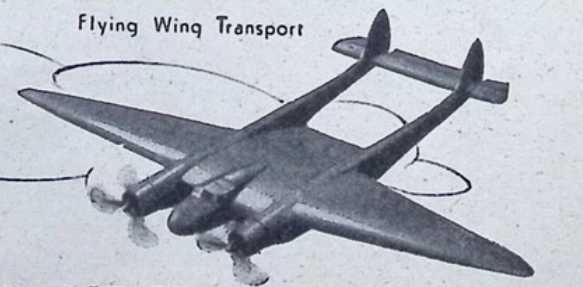
A 1943 advert for the Cunliffe-Owen Company featured this image of a "Flying Wing Transport".
A 1942 proposal by Cunliffe-Owen for a dedicated ground-attack aircraft probably had some of the features of the OA-1. It is possible that the design Cunliffe-Owen prepared for an Air Ministry 1943 specification for a twin-engined aircraft to operate off aircraft carriers (S6/43, later reissued as S11/43) had a "lifting fuselage" layout. From 1943, their adverts in the aeronautical press featured images of an aircraft project that had a fuselage similar to the Lockheed Constellation, but with only two rudders and a high mounted wing. It represented a project to build a 40-seat airliner to be powered by either four Bristol Centaurus or four American Wright Duplex C18 engines. The aim was for it to be operated by a transatlantic air service run by the Cunard shipping line. The initial proposal was for it to be unpressurised, which would have put it at a distinct disadvantage to American designs with pressure cabins, such as the Lockheed Constellation and Boeing 377 Stratocruiser.
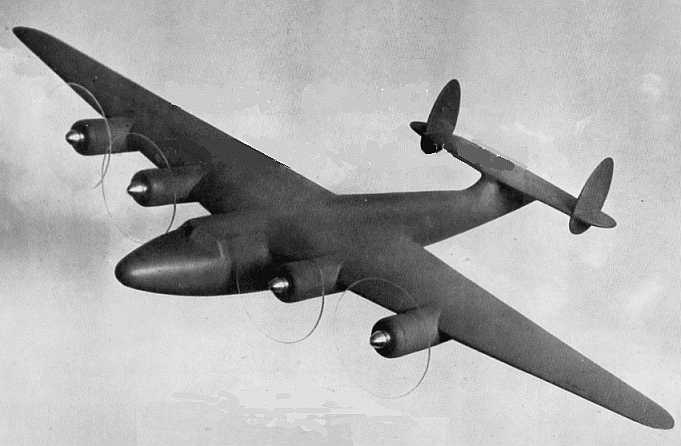
The model featured in adverts for the Cunliffe-Owen company from 1943.
Cunliffe-Owen went for a more modest layout for their "Concordia" 10-passenger feeder-liner, the prototype of which flew in 1947. The Concordia seemed to be aimed at the same market that had made the Lockheed Electra such a success in pre-war Europe. Lockheed themselves seemed to hold hopes for capturing the same sort of market with their Saturn feeder-liner. However, the marketplace had been changed forever by the war, with a bigger volume of passengers. There was no market for small but complex aircraft such as the Concordia and Saturn in a world awash with cheap ex-military transports like the DC3 Dakota (although there was a market for designs of the smaller capacity if they were less complex, cheaper-to-run aircraft such as the de Havilland Dove). The failure of the Concordia project saw Cunliffe-Owen withdraw from the aviation marketplace. The death of Sir Hugo Cunliffe-Owen in December 1947 also played a part in the winding-up of the company, which went into receivership in July 1948. Some of the factory space continued to be used for the assembly of two Cierva W11 "Air Horse" helicopters by the G&J Weir company, the first of which flew in December 1948. The construction of the M27 motorway separated the Cunliffe-Owen factory from Eastleigh Airfield (now Southampton Airport). The site was occupied for many years by the Ford Motor Company, which built the Transit van there.
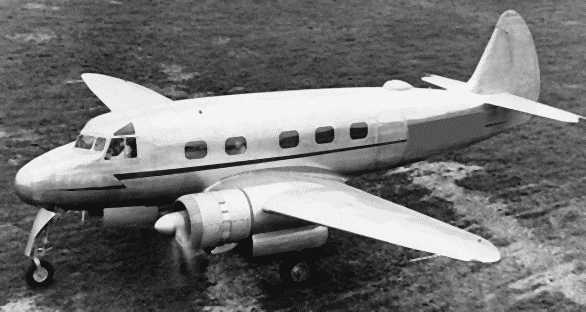
The Cunliffe-Owen Concordia, too complex and expensive to run for its small passenger carrying capability. Two prototypes were built and work started on building six production aircraft.
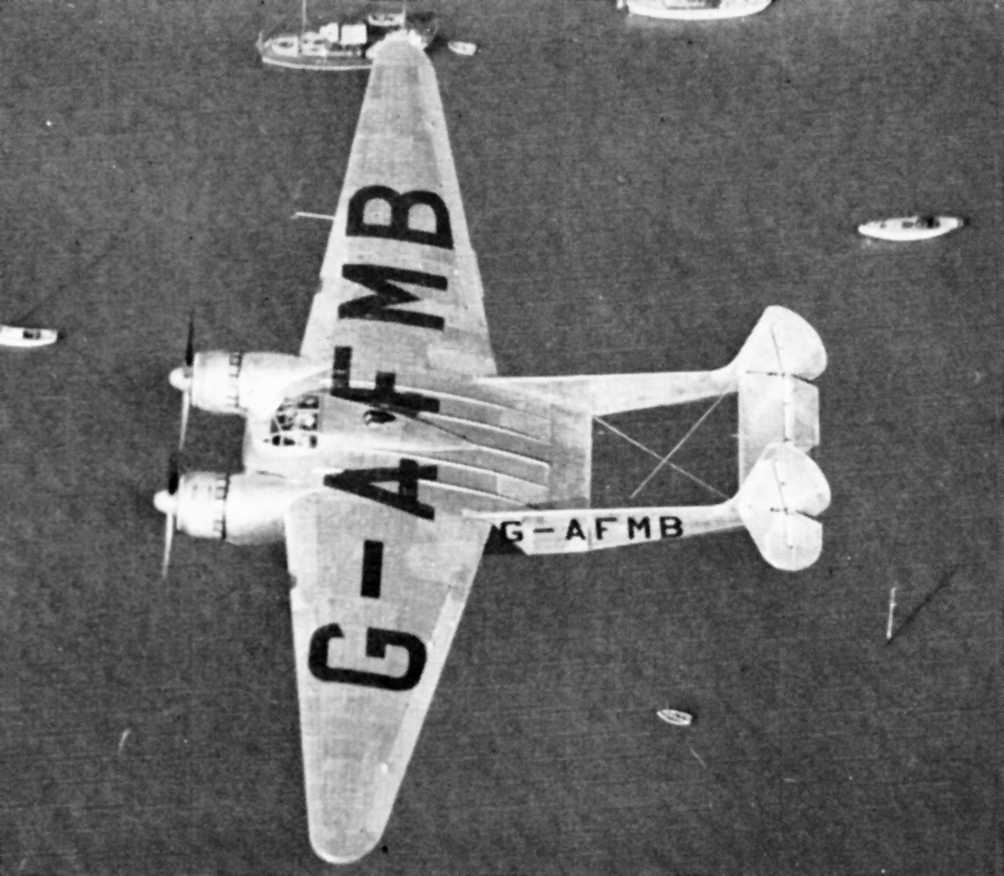
OA-1 over the Solent.
OA-1 Specifications
Engines: Two Bristol Perseus XIV-C single-speed, medium supercharged sleeve-valve radials of 710 horsepower each at 2,250rpm. They could produce 890 hp at 2,700 rpm for short periods for takeoff. The Mk XIV-C version of the Bristol Perseus sleeve-valve engine used on the OA-1 was a civil-rated engine that produced substantially less power than the military Perseus XII. The OA-1 was the only aircraft to use the XIV-C version of the Perseus. It is possible that these engines were specially made to take the German VDM propellers.
Max Speed: 218 mph (351 kph), expected to cruise around 180 mph (290 kph). Higher maximum and cruising speeds were advertised in Cunliffe-Owen's trade adverts for the proposed Mark II.
Ceiling: About 20,200 ft (6,157 metres). Being unpressurised, it could not have operated as a normal passenger aircraft at such heights unless the passengers were issued with oxygen bottles and were happy to experience the considerable discomfort of flying at such an altitude without pressurisation.
Crew of two (pilot and co-pilot). Passenger capacity 20 (the prototype was fitted out for only 15 passengers in luxurious armchair seats made by the Rumbold company). In transit to and service in French Equatorial Africa a radio operator would almost certainly have been required.
Fuel capacity: 650 gallons (2,955 litres) in eight wing tanks.
Maximum range: 1,300 miles (2092 km). Some sources quote a much higher figure of 1,950 miles (3,138 km), which is the range quoted in some adverts for the proposed Mark II version. It is possible that auxiliary internal fuel tanks were fitted to the OA-1 for the flight out to Africa.
Span: 73 feet 6 inches (22.4 metres). Length: 44 feet (13.4 metres).
Empty weight: 11,254 lbs (5105 kg). Loaded weight (permitted): 18,010 lbs (8169 kg). Overload weight (long takeoff): 19,000 lbs (8618 kg).
Takeoff run, distance to unstick: 405 yards (370 metres). To clear 66 feet (20 metres): 650yards (594 metres). Landing run: 340 yards (311 metres). The takeoff and landing runs of the OA-1 may look modest by today's standards, but were considered somewhat excessive for British aircraft at the time. For example, the contemporary DH95 Flamingo, with comparable engine power, would unstick (with maximum payload) after a run of only 250 yards (approx 230 metres), and in the distance it would take the OA-1 to clear a 66-foot obstacle, the Flamingo could clear a 170-foot obstacle.
WHAT IF?
The Cunliffe-Owen OA-1 Flying Wing was almost certainly too late to be a success in the civil marketplace. By the time it was ready to fly, it was already 3 or 4 years behind the times in terms of performance and economy. When Burnelli had first flown his UB-14 design in 1934, it was cutting-edge. If he had successfully negotiated production rights with established aviation firms straight away, he might well have produced a winning product, but the delay in dealing with "start-up" companies meant he missed the boat, and the great promise of the basic UB-14 design was lost. It is interesting to speculate what might have happened if he had got established British aviation companies interested in producing his designs. Ironically, in 1934/35, quite a few British aircraft companies were casting around for new civil designs to build at the time the Burnelli design became available and before their order books filled up with military contracts for the coming war. Avro had produced the Type 618 airliner and later variants based on licences purchased from Fokker, while Vickers had been building a progression of "Viastra" airliner designs based on technology licensed from Michel Wibault; both were coming to the end of their development potential just as the UB-14 became available. The Westland Aircraft company had recently given up on the development of their Wessex trimotor, and their earlier experience with building the abortive Westland Dreadnaught blended-fuselage aircraft might have been applicable to the Burnelli designs. If the UB-14 and its derivatives had reached production in the USA and UK as early as 1936, maybe some could have taken their place alongside the C-47/DC3 Dakota in the air forces of the Allies?
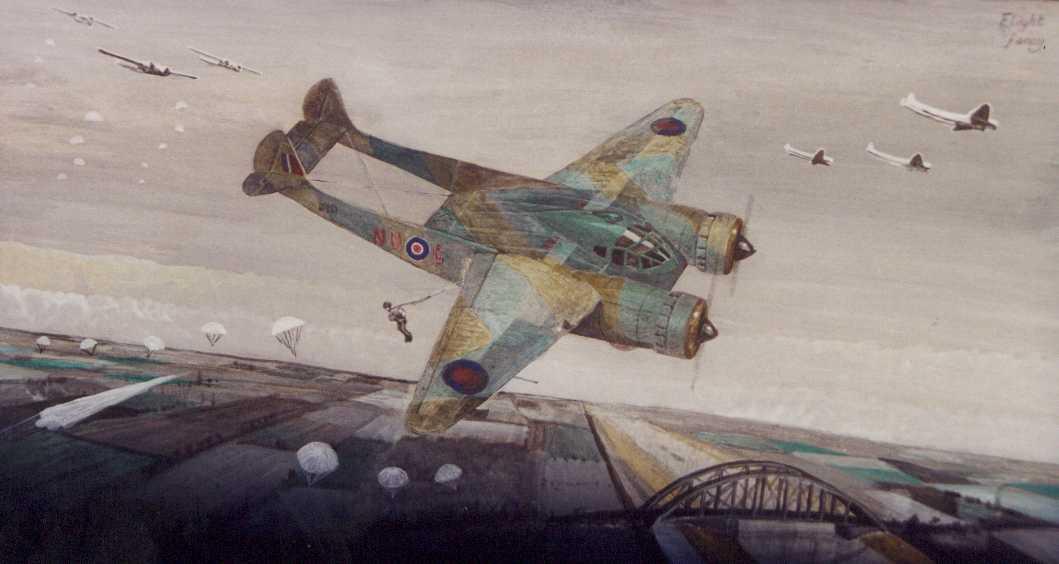
My painting shows the Cunliffe-Owen OA-1 as if it had gone into production and been used as a transport aircraft by the RAF in WWII. In this case shown dropping paratroops. I've fudged the problem of exiting by not showing the doorway the paratroops are jumping from. On the original design, if you had jumped from the standard door, you would have gone straight into the rear wing support strut! I have reasoned that a smaller parachute door would have been positioned to the rear of that strut or in the floor of the aircraft.
Looking at the Cunliffe-Owen OA-1 in isolation, it is tempting to speculate that if Sir Hugo had been able to get the quality of staff he needed, he might have got the OA-1 prototype flying a little earlier, and without the myriad design and construction flaws it actually had, so it could get a Certificate of Airworthiness in early 1939. Under those circumstances, it's possible to imagine aircraft starting to come off the production line of the new factory about the time the war started (first deliveries would probably have gone to Olley Air Services, an airline and aircraft taxi service that Sir Hugo Cunliffe-Owen had the major shareholding in). Even then, it's probable that the Air Ministry would have only allowed a limited production run (production of all the promising British transport aircraft, DH91 Albatross, DH 95 Flamingo and AW Ensign all had short production runs). The Air Ministry simply did not foresee that the new World War would demand huge numbers of transport aircraft; it thought the outcome of the war would be decided within weeks or months of war being declared by massive bombing by the competing fleets of bomber aircraft.
Of course, it is possible that if the OA-1 or the proposed Mark II had made it into production, the design might have been adapted for more warlike uses, although only as an interim stopgap. Hence, the flight-of-fancy painting below.
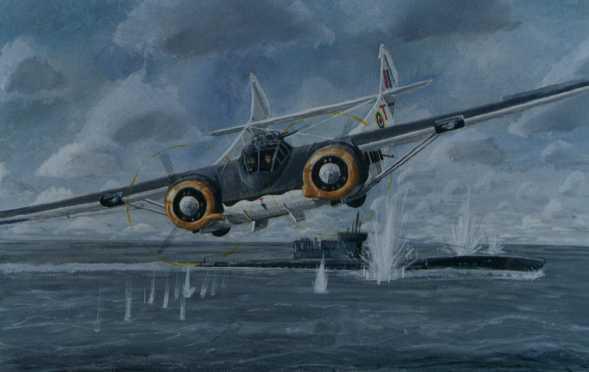
This painting shows the OA-1 as it might have appeared if it had been pressed into service by RAF Coastal Command. Such a thing is not at all unlikely if it had been in production. The Lockheed Hudson was a conversion of an airliner, as was the Avro Anson, both of which were used by Coastal Command. Also, a conversion based on the Douglas DC2 airliner called the B-18 Bolo was used for coastal/ocean patrol by the Canadian Air Force (who called it the "Digby") and was also used extensively by the USAAF for the same role in the Caribbean.
One thing is sure, if it had gone into production, being built in Southampton, the OA-1 would have never been called a "Clyde Clipper". Perhaps a better name would have been "Solent Schooner"!
Interestingly, the modern UAV drone produced by Windracers, which has been used for deliveries to remote islands and communities for the Royal Mail, and also found use in the war in Ukraine, has a lifting fuselage configuration very similar to the OA-1. It did its first trial flights to the Isle of Wight over the Solent. You can see a short YouTube video of it at <this link>.
Notes
¹ The Scottish Aircraft and Engineering Company's "bomber" was advertised with pictures of an unmodified UB-14 and seems to have been just their "Clyde Clipper" with minimum modifications to enable it to carry bombs. It should not be confused with the "Burnelli A-1 Bomber" which was a different project altogether, designed by Burnelli back in the USA with a more traditional-looking fuselage nose projecting forward of the lifting fuselage with a bomb aimer's position and a front turret. It also had much deeper tail booms able to accommodate a dorsal turret in each. The A-1 design was submitted for the US Army Air Corps 1935 competition for a new bomber, a competition won by the Douglas B-18 Bolo.
² The New York to Paris Air Race was due to be run in August of 1937, to commemorate the tenth anniversary of Charles Lindbergh's pioneering solo flight. In the event, the race was changed to run between Istres in France and Damascus because of a fear that accidents would discourage passengers for the flying boat services that were being planned to cross the Atlantic. The race was comprehensively won by the Italians, with Italian aircraft and crews taking first, second and third places. Sir Hugo's entry of a "Clyde Clipper" was featured in prominent advertisements in the aeronautical press in May 1937. This displayed amazing optimism by the Scottish Aircraft and Engineering company, who had no construction started on the aircraft that was due to fly in a major competition in only 3 months time! The advertisements said the crew for Sir Hugo's Clyde Clipper were to be provided by Olley Air Services, but one source claims he tried to recruit Amy Johnson for the enterprise. The commentary on this contemporary newsreel hints at a famous female perhaps piloting the aircraft.
³ Not only were the aviation workforce in the Southampton and Solent area very skilled, they were also noted for a general lack of union activity, which meant they were also relatively lowly paid (Read C.R. Russells "Spitfire Postcript" ISBN 095248580X).
⁴ Mollison and his crew were in the "Air Transport Auxiliary" (ATA). Although the ATA had ranks and usually wore uniforms, its members were still civilians; they had the same status as a civilian airline crew. It was highly unusual for an ATA crew to fly outside of British airspace.
⁵ See the article "Air France Libre" in the list of sources below.
⁶ See page 103 of "Wings at Sea", a wartime autobiography by Gerard Woods, although when he saw the OA-1 taking off from Gibraltar he assumed it was flying back to the UK. Published by Conway Maritime Press in 1985. ISBN:0851773192. Thanks to Brian Johnston for alerting me to this account.
* Does anyone know what "B.A.O." stood for? There are suggestions that the first two letters stood for "Burnelli Aircraft", but it seems much more likely that it stood for "British American" since Sir Hugo's primary company was British American Tobacco Ltd. If anyone can give me a definitive answer, please get in touch.
Links
A YouTube video of a contemporary newsreel shows the mock-up of the "Clyde Clipper".
Video of the Cunliffe-Owen OA-1 on the British Pathe Newsreel Website
You get a glimpse of the OA-1 in this video of French officers touring England in 1939.
The story of Cunliffe-Owen on the "Solent Sky" website.
Photos of the OA-1 under construction on the "1000 Aircraft Photos" website.
Cunliffe-Owen listing on the "British Aviation - Projects to Production" website.
Cunliffe-Owen Aircraft Ltd listing in "Grace's Guide".
This page on the "Hyperwar" website has an interesting description of the American Armaments 37 mm cannon as planned to be used on the "Clyde Comet" fighter version of the "Clyde Clipper". You'll need to scroll down to pages 593 to 595 to find the description. It seems to have been a weapon with many disadvantages.
Video on YouTube of the damage to the Cunliffe-Owen factory after a Luftwaffe raid in September 1940. The Heinkel He 111 had been shot down the previous month and was being stored at the factory at the time (it was on a tour of British towns for a fund-raising drive).
A YouTube video of a contemporary newsreel shows the mock-up of the "Clyde Clipper".
Video of the Cunliffe-Owen OA-1 on the British Pathe Newsreel Website
You get a glimpse of the OA-1 in this video of French officers touring England in 1939.
The story of Cunliffe-Owen on the "Solent Sky" website.
Photos of the OA-1 under construction on the "1000 Aircraft Photos" website.
Cunliffe-Owen listing on the "British Aviation - Projects to Production" website.
Cunliffe-Owen Aircraft Ltd listing in "Grace's Guide".
This page on the "Hyperwar" website has an interesting description of the American Armaments 37 mm cannon as planned to be used on the "Clyde Comet" fighter version of the "Clyde Clipper". You'll need to scroll down to pages 593 to 595 to find the description. It seems to have been a weapon with many disadvantages.
Video on YouTube of the damage to the Cunliffe-Owen factory after a Luftwaffe raid in September 1940. The Heinkel He 111 had been shot down the previous month and was being stored at the factory at the time (it was on a tour of British towns for a fund-raising drive).
Sources
"First of the Wide-Bodies?": A 4-page article by Peter London in the July-August 1995 (No 58) Edition of "Air Enthusiast" Magazine.
"Burnelli's Lifting Fuselages": A series of articles by Richard Riding that appeared in the March to July 1980 editions of the "Aeroplane Magazine". It is the June edition that covers the Cunliffe-Owen OA-1.
"The Cunliffe-Owen COA-1": An article in the "Head-On View" series (number 27) in the summer 2008 edition of "Air-Britain Archive" magazine.
"Air France Libre": An article by Michael West in the spring (March) 2011 edition of "Air-Britain Archive" magazine. It features a tiny picture of the OA-1 at 2TARU.
"Cunliffe-Owen Flying Wing": A two-page article in the Aircraft Described series (No143) in the July 1965 edition of "Aero Modeller" magazine (unattributed).
"A Lift Less Ordinary": A 5-page article by Peter London in the January 2016 edition of "Aeroplane" magazine.
"British Built Aircraft, Vol2, South West & Central Southern England": By Ron Smith, First published 2003 by Tempus.
"The Secret Years - Flight Testing at Boscombe Down 1939-1945": By Tim Mason, published by Hikoki. ISBN 0 951899 9 5
The October 1985 edition of "Aeroplane Monthly" carried an article in the "Probe Probare" series by Alec Lumsden and Terry Heffernan about the testing of the OA-1 at A&AEE.
"Today's Project, Tomorrow's Achievement..?" : an article by Ralph Peagram in issue 45 (October 2023) of "The Aviation Historian" magazine. It is principally about the Cunliffe-Owen 4-engined transatlantic airliner project.
"British Piston Aero-Engines and Their Aircraft": By Alec Lumsden, ISBN: 1 85310 294 6. For details of the Bristol Perseus engine.
A letter from Squadron Leader D.A. Ross, published in the 13th May 1965 edition of "Flight International" magazine, recounts that he was one of four RAF groundcrew stationed at Fort Lamy (modern N'Djamena in Chad) when the OA-1 arrived, flown by Jim Mollison. The post was manned by the 2nd Battalion of the French Colonial Army. Ross said he was taken for a short flight in the OA-1.
A letter from Norman Smith giving a detailed first-hand account of the ultimate fate of the Cunliffe-Own OA-1 at El Kabrit in Egypt was printed in the "Skywriters" letter pages of "Aeroplane Monthly" magazine in November 1979.

No Ads, No Cookies, No AI generated content.